
Factory operations management is the organisation, supervision and maintenance of technical infrastructure, physical facilities and ancillary services. Unlike production management, which deals with the production line, output and finished product quality, it focuses on keeping the whole factory running safely, reliably and under control. This article sets out the core components, the standardised implementation process and the criteria that help businesses choose a suitable operating model.
TABLE OF CONTENTS 1. What Is Factory Management? 1.1. Scope of Facilities and Industrial Asset Management 1.2. Distinguishing Factory Management, Production Management and Factory Maintenance 2. The Role of Factory Operations Management in Production 2.1. Maintaining the Stability of Infrastructure and Assets 2.2. Improving Risk Control and Operational Safety 2.3. Optimising Investment Efficiency and Costs 2.4. Supporting Energy Efficiency and Sustainability Goals 3. What Do Factory Management Services Include? 3.1. Set-up and Pre-operation Phase 3.2. Routine Operation Phase 4. How to Choose a Factory Management Model and Provider 4.1. Choosing a Suitable Management Model 4.2. Assessing the Capability of the Management Provider 4.3. Setting Service Level Agreements (SLAs) and Key Performance Indicators (KPIs) Conclusion Frequently Asked Questions
1. What is factory management?
1.1 Scope of facilities and industrial asset management
From an industrial real estate management perspective, factory management is the organisation of resources, processes, infrastructure and technical systems to maintain a safe, stable and controlled production environment. It goes beyond managing physical facilities or responding to breakdowns, combining day-to-day operations with long-term asset value management.
This work does not replace production management. Decisions on production planning, raw materials, production line staffing, output and finished product quality are managed directly by the production team.

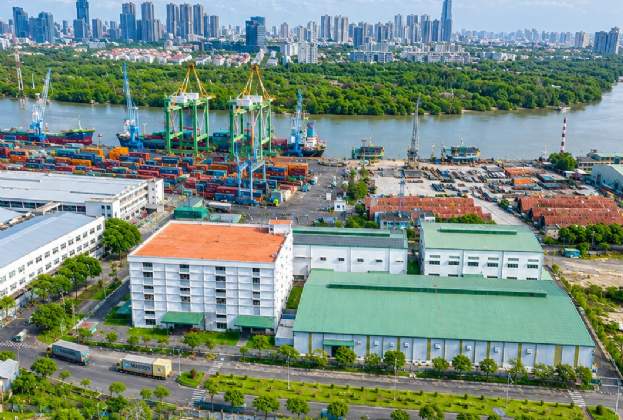
Factory operations management plays a key role in ensuring efficient production.
1.2. Distinguishing factory management, production management and factory maintenance
Drawing clear boundaries between these functions is essential to avoid assets being left without an owner, duplicated responsibilities between departments, or KPIs being assigned to a party with no real control over the outcome.
| Concept | Focus | Main scope |
|---|---|---|
| Factory management | Overall operating conditions of the facility | Physical facilities, M&E technical systems, physical assets and support services within the assigned scope |
| Production management | Technical processes and product creation | Planning, production line operation, raw materials, production staffing, output and quality |
| Maintenance management | Maintaining or restoring asset function | Technical inspections, planned preventive maintenance (PPM), fault rectification and repairs |
Maintenance is a specialised technical activity within factory management, aimed at sustaining or improving the performance of assets. Maintenance of the factory's shared M&E and fire protection systems falls within the scope of the operating company, while specialist machinery and production equipment may be handled by the technical team of the owner or tenant.
.jpg "The relationship between management systems")
The relationship between management systems.
Illustrative example:
For HVAC systems, the management company is responsible for operating the factory's shared technical systems, ensuring they run reliably and to standard. Specialist machinery, equipment or HVAC systems that serve production alone are managed and operated directly by the tenant's own technical team. The tenant is also the party that defines the specific requirements of the production line, such as temperature, humidity and other conditions needed for the production process.
2. The role of factory operations management in production
2.1. Maintaining the stability of infrastructure and assets
Production is only truly efficient when infrastructure and technical utilities are always ready to meet the needs of the production line. Any fault involving electricity, water, HVAC, compressed air or other support systems can directly affect productivity and production schedules.
Factory operations management helps maintain the stability of assets and support systems, reducing the risk of unplanned downtime and unexpected costs while improving the continuity of factory operations.
2.2. Improving risk control and operational safety
Production environments always carry risks relating to people, assets, equipment and legal compliance. A safety, fire or environmental incident can cause not only property damage but also disruption to business operations and harm to a company's reputation.
Factory operations management helps businesses build a better-controlled operating environment, in which risks are identified early and monitored and managed systematically. This helps limit the impact of incidents on production and supports businesses in meeting health, safety and environmental (HSE) and compliance requirements.
2.3. Optimising investment efficiency and costs
For many manufacturers, physical assets account for a large share of total capital investment. However, the value of an asset lies not only in its initial purchase cost but also in how well it performs throughout its useful life.
Factory management activities give an overall view of the condition, performance and risks of assets, helping businesses make investment, upgrade or replacement decisions based on real data rather than reacting to breakdowns. This approach supports optimising the long-term cost of owning assets and improving the efficient use of capital.
2.4. Supporting energy efficiency and sustainability goals
Energy, water and other resources are increasingly significant factors in operating costs and in companies' sustainability commitments.
By monitoring and optimising the performance of technical infrastructure, factory management helps businesses use resources more efficiently, reduce waste during operations and lay the foundation for energy-saving programmes, emissions reduction and long-term environmental, social and governance (ESG) goals.
In summary: From a management perspective, operations management does not directly create products, but it creates the conditions that allow production to run reliably, safely and efficiently. The value of factory management lies in its ability to maintain operational continuity, control risk, optimise asset performance and help businesses use resources sustainably. It is also the foundation for improving a factory's competitiveness and long-term growth.
3. What do factory management services include?
Factory management services are structured in two consecutive operating phases: (1) Set-up and pre-operation, and (2) Routine operation. The first phase lays the foundation for asset data, standard operating procedures (SOPs) and budgets, and the quality of the entire operating cycle that follows depends directly on how thoroughly this preparation phase is completed.
3.1. Set-up and pre-operation phase
This phase is carried out before the factory formally goes into operation or at the point of handover. Its main aim is to bring all technical infrastructure and assets from a handed-over state to a state of controlled operational readiness.
| Item | Details | Role | Key performance indicators (KPIs) to track |
|---|---|---|---|
| Personnel |
|
Build a team of specialists to take over management of the facility. | Fill rate for key positions; percentage of staff holding safe operation or fire protection certificates |
| Operational preparation |
|
Build the financial foundation and the standards and regulations. | Budget variance; completeness of the rulebook before opening day. |
| Procurement & contractors |
|
Establish a stable, transparent supply chain of support services. | Cost savings achieved through tendering; 100% of contractors complying with project standards. |
| Technical |
|
Ensure the core systems operate safely and without overload from day one. | Number of outstanding defects at handover; time taken to complete system handover. |
| Design & ESG |
|
Correct design flaws that hinder logistics and enhance the value of green assets. | Green building rating score achieved; percentage of floor area optimised for industrial traffic flow. |

The importance of the pre-operation phase in effective factory management for ensuring smooth factory operations.
| Item | Details | Role | Key performance indicators (KPIs) to track |
|---|---|---|---|
| Operations |
|
Ensure an uninterrupted production environment with zero downtime. | Uptime of shared infrastructure; contractor SLA compliance score. |
| Technical & facilities management |
|
Extend the life of heavy-duty equipment and prevent performance decline. | Overall equipment effectiveness (OEE); |

Effective day-to-day management of factory activities to optimise facility performance, coordinate staff and maintain long-term stability.
Note:
The structure above is a reference framework. The actual list of tasks will be adjusted flexibly according to the scale of the asset, the complexity of the technical systems, industry standards and the service level agreement (SLA) in the contract. Defining responsibility boundaries clearly from the pre-operation phase is the key prerequisite for choosing a suitable management model, as covered in the next section.
|
Explore Savills' factory management service model Savills delivers operations management services for factories, warehouses and manufacturing plants in Vietnam using a hybrid model: an on-site operations team at each project, supported by technical specialists from the central office and smart technology applied to operations management. The scope of work is tailored to each facility's asset list, the complexity of its technical systems and its specific legal compliance standards.
|
4. How to choose a factory management model and provider
Once the scope of work has been standardised, a business needs to decide who will carry it out and how operating performance will be measured. The decision should not rest on short-term cost alone. It calls for a balanced view of the level of operational control required, in-house expertise, technical complexity and the specific risk profile of each factory.
4.1. Choosing a suitable management model
A business can choose from three main operating management models:
- In-house management: The business recruits, trains and directs the entire operations team itself.
- Full outsourcing: All or most of the management scope is entrusted to a specialist provider under a service contract.
- Hybrid model: The business retains core control functions while outsourcing items that require specialist expertise or where resources can be used more efficiently.
The best model depends on the size of the factory, the complexity of its M&E systems, safety standards and existing management capability. Businesses should assess the following key factors before deciding:
- Technical systems that have a direct impact on factory continuity.
- Operational tasks that must remain under internal control.
- Existing expertise and the size of the available workforce.
- Items that need support from contractors or external specialists.
- The OPEX budget that can be sustained over the long term.
Outsourcing lets a business quickly adopt standardised processes and a high level of expertise without having to build a team from scratch. Even so, the business still oversees service quality and remains responsible for core obligations that cannot be transferred.
4.2. Assessing the capability of the management provider
A suitable operations management provider needs to demonstrate that it can deliver for the specific technical scope of the factory, rather than simply offering a generic list of services.
Businesses can evaluate a prospective partner against the following key criteria:
- Practical experience: Has previously managed factories or industrial facilities of a similar size and with comparable mechanical and electrical (M&E) infrastructure.
- Technical capability: Has a team of specialists able to operate and inspect the systems and coordinate maintenance across the whole facility.
- Health, safety and environment (HSE) capability: Has established procedures for occupational safety, fire protection and contractor control, together with clear incident response plans.
- Transition plan: Has a roadmap for taking over assets, deploying staff and reviewing records, and for ensuring continuity of service during the takeover period.
- Subcontractor management: Has a mechanism for selecting, quality-controlling and assessing the performance of specialist service providers.
- Reporting and data systems: Applies methods for recording data, tracking work progress and reporting asset condition transparently.
- Clear cost structure: Provides a detailed cost breakdown by scope of work, staffing levels, materials and expected contingent costs.
The assessment should combine capability documents, a realistic implementation plan, the staffing organisation chart and the provider's ability to handle hypothetical scenarios. The service scope should also be tailored to the specific features of each production facility rather than imposing a fixed model.
4.3. Setting service level agreements (SLAs) and key performance indicators (KPIs)
A service level agreement (SLA) defines the standard of service that has been committed to, while a set of key performance indicators (KPIs) measures actual results. Used together, they turn general contract terms into quantifiable standards, making monitoring and assessment easier.
A well-constructed SLA framework should set out the following elements:
- Scope boundaries: The scope of duties and a specific responsibility matrix for each party.
- Technical standards: The minimum service level that applies to each item.
- Response times: Required response times and incident resolution times, by severity level.
- Coordination mechanism: Reporting procedures, document approval and how departments communicate with each other.
- Remedies for non-performance: The penalties that apply when service quality falls short of the commitment.
The KPI system focuses on measuring the following key indicators:
- Completion rate of the planned preventive maintenance (PPM) programme.
- Response time and mean time to repair (MTTR).
- Recurrence rate of technical faults with the same root cause.
- Availability of the M&E systems within the management scope.
- Level of staff and contractor compliance with safety and environmental regulations.
- Deviation of electricity, water and fuel consumption from the baseline.
- On-time completion rate of corrective and preventive actions (CAPA).
- Satisfaction levels among the departments and units using on-site services.
Each KPI should specify its calculation formula, the data source used for verification, the quantitative target and the reporting frequency. Indicators must fall within the direct control of the management provider. Output or finished product quality should not be used to assess an FFM provider that does not directly run the production line.
Results should be reviewed regularly to analyse the root causes of recurring incidents, agree corrective measures and improve processes. In this way, the service contract goes beyond completing administrative tasks and becomes a driver of continuous improvement in operating quality.
In summary: Choosing a factory management model must start by identifying the specific features of the industrial project and the scope of work. A suitable management provider needs more than a large workforce. It must demonstrate technical capability, safety procedures, transparent reporting and a clear mechanism for measuring performance.
|
Conclusion
Factory management lays a solid foundation for keeping physical facilities, technical systems and ancillary services safe, stable and under continuous control. From asset maintenance and risk management to energy monitoring and lifecycle costs, every element contributes directly to ensuring optimal operating conditions for production.
To put this into practice effectively, businesses need to clarify the boundaries of the work, choose a suitable management model and set quantifiable SLA and KPI standards. An outstanding facilities management system is not measured by the number of services it provides, but by how precisely it meets the specific needs of the factory, controls risk effectively and optimises strategic operating decisions over the long term.
Frequently Asked Questions
1. What is factory management?
Factory management is the process of organising, operating and maintaining physical infrastructure, mechanical and electrical (M&E) systems and ancillary services. Its core aim is to establish an operating environment that is safe, stable and under control.
2. Does factory management overlap with production management?
No. Production management focuses on running the production line, controlling raw materials, labour, finished product quality and output targets (in line with ISA-95). Factory management, by contrast, focuses on creating and maintaining the technical infrastructure conditions that allow production to run continuously.
3. What are the main items included in factory management services?
The scope includes: operation and maintenance of M&E systems, safety and fire protection (EHS) management, security, industrial cleaning, waste management, energy monitoring, contractor management and operational data reporting. The detailed items are tailored to the scale of the facility and the specific contract terms.
4. Does factory management cover maintenance of production equipment?
Not necessarily. Production equipment is usually the responsibility of the production engineering team or the supplier of the specialist equipment. A factory management provider takes it on only when this item is clearly defined within the service scope.
5. Should a business manage factory operations in-house or outsource?
The decision depends on the scale of the assets, technical complexity, in-house capability and the level of control the business wants. A business can choose to manage in-house, outsource fully or adopt a hybrid model, retaining core control functions and assigning specialist tasks to an external partner.
6. What criteria should be used to assess a factory management provider?
The key criteria include: experience managing comparable industrial assets, M&E technical capability, EHS safety procedures, contractor management capability, the transition plan (mobilisation), the transparency of the reporting system and the cost structure.
7. What is the role of SLAs and KPIs in factory management?
An SLA sets out service standards, areas of responsibility and response times, while KPIs quantify actual delivery (such as the on-time planned preventive maintenance (PPM) rate, mean time to repair (MTTR), safety compliance and deviation in energy consumption).
8. How is the effectiveness of factory management measured?
Effectiveness is assessed through asset reliability, risk control, service quality, data accuracy and resource efficiency. Production output is not used as a direct performance measure for a factory management provider.
Savills delivers bespoke Operational Consultancy services and Management services tailored to Developer needs at every stage of a project's life. Property Management Services - Savills Vietnam EXPLORE OUR SERVICE CONNECT WITH OUR EXPERTS



.jpg)
.jpg)
.jpg)

.jpg)